



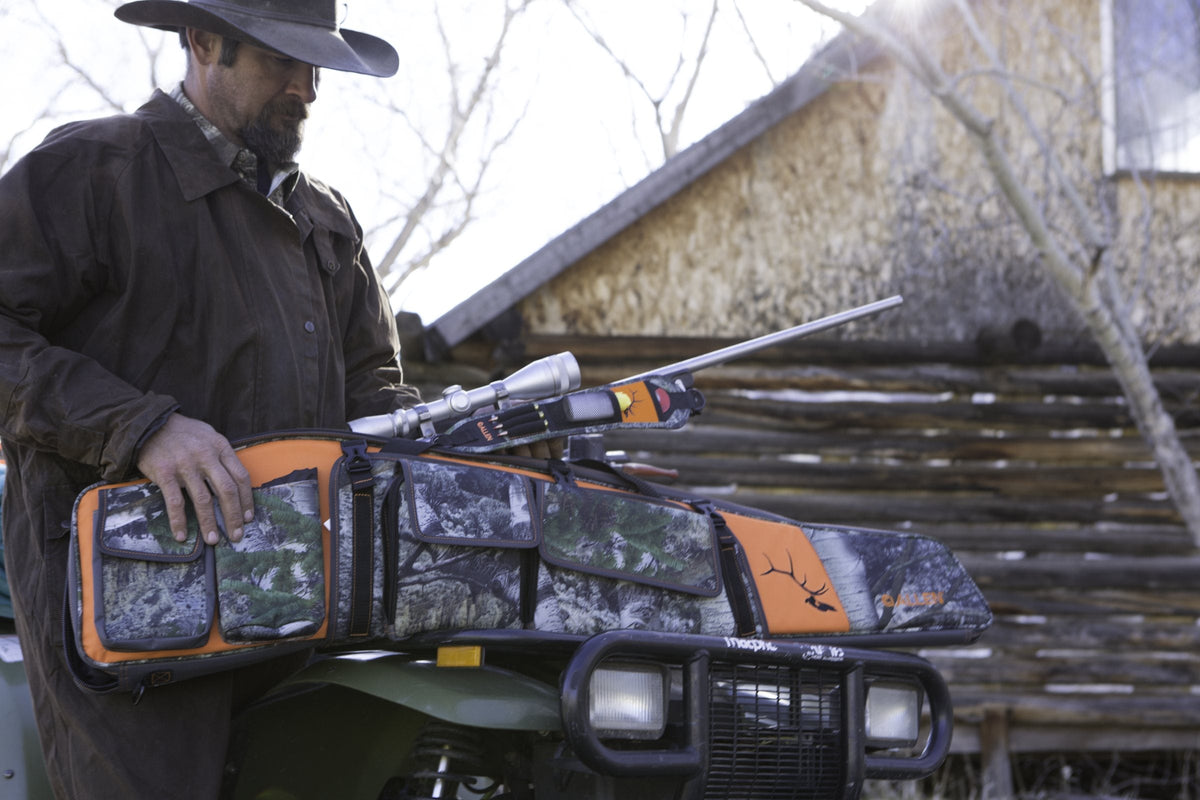
Whether you're transporting a hunting rifle, storing a shotgun, carrying a pistol to the range, or protecting a scoped tactical firearm, choosing the correct gun case size is critical for firearm protection, safety, and long-term durability.
One of the most common questions firearm owners ask is:
“What size gun case do I need?”
The answer depends on:
- Firearm length
- Scope or optic size
- Barrel configuration
- Grip, frame and magazine size (for pistols)
- Accessories attached
- Intended use (travel, hunting, range, storage)
Choosing the wrong gun case can lead to unnecessary movement, damaged optics, zipper strain, or poor protection during transport.
This guide explains exactly how to measure a gun case correctly — including rifles, shotguns, pistols, revolvers, scoped firearms, and tactical setups.
Watch: How to Measure a Gun Case (Video Guide)
Prefer a visual walkthrough?
Watch our step-by-step video showing exactly how to measure your rifle or shotgun for the correct gun case size.
[Click here to watch]
In the video, we cover:
- Measuring total firearm length
- Measuring scoped rifles
- Choosing between soft and hard gun cases
- Common sizing mistakes
- How much extra room you should leave inside a case
Why Proper Gun Case Sizing Matters
A properly fitted firearm case helps:
- Protect your rifle, shotgun, or pistol during transport
- Prevent scratches and movement
- Reduce stress on optics and scopes
- Improve long-term firearm storage
- Make range trips and travel easier
A gun case that’s too small can put pressure on your firearm and accessories.
A gun case that’s too large may allow excessive shifting inside the case during transportation.
The ideal fit provides protection while still allowing enough clearance for padding and easy access.
Step 1: Make Sure Your Firearm Is Unloaded
Before measuring any firearm:
- Remove the magazine
- Open the action
- Visually inspect the chamber
- Follow all firearm safety procedures
Always measure firearms safely and responsibly.
Step 2: Measure the Total Length of Your Firearm
The most important measurement is the firearm’s overall length.
To measure correctly:
- Place the firearm flat on a stable surface
- Measure from the tip of the barrel to the back of the stock
- Include permanently attached muzzle devices or accessories
Measuring a pistol or revolver? Use the handgun steps further down — handgun cases are sized a little differently.
Example:
If your rifle measures 46 inches long overall, you’ll typically want a 48-inch rifle case.
Should a Gun Case Be Bigger Than the Gun?
Yes — slightly.
This is one of the most searched firearm case questions online.
Recommended Extra Space:
- Soft gun cases: Add 1–2 inches
- Hard gun cases: Add 2–4 inches
This additional room:
- Prevents tight pressure points
- Protects optics and finishes
- Allows for interior padding
- Makes loading/unloading easier
Avoid choosing the absolute tightest possible fit.
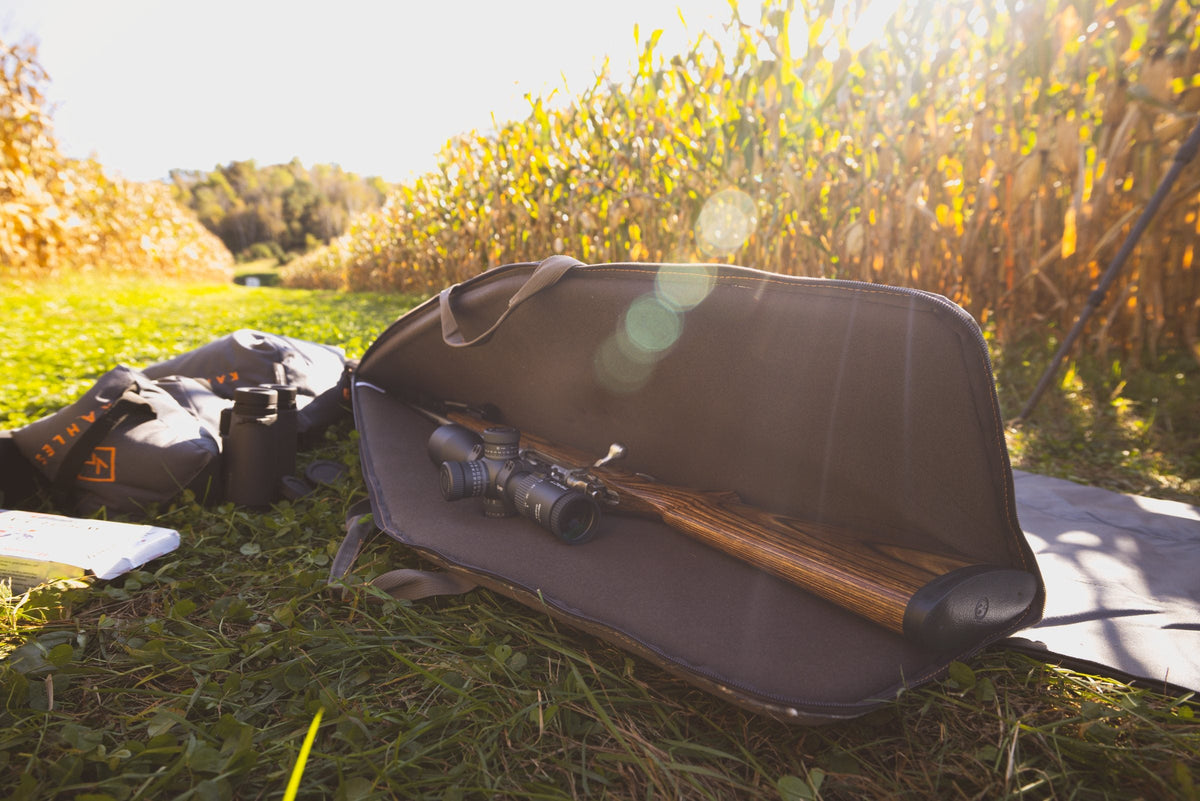
How to Measure a Scoped Rifle for a Gun Case
Many firearm owners only measure length — but optics also matter.
If your rifle includes:
- A mounted scope
- Red dot sight
- Thermal optic
- Bipod
- Large turret system
- Oversized bolt handle
You’ll also need to check:
- Interior width
- Interior depth
- Lid clearance
- Foam thickness
Important:
Large scopes often require deeper rifle cases to avoid pressure during transport.
For tactical rifles and precision setups, always verify the interior dimensions of the gun case — not just the exterior measurements.
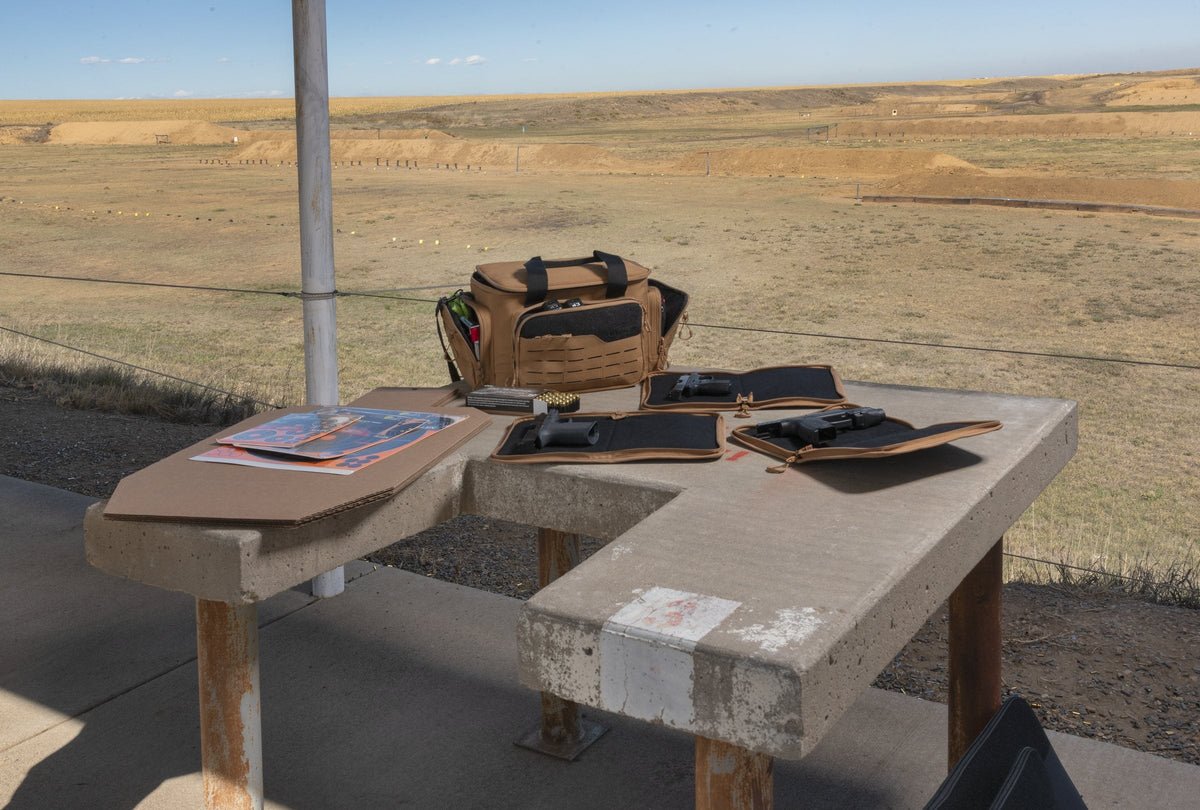
How to Measure a Pistol or Revolver for a Handgun Case
Handgun cases are listed by length (for example 8", 9" or 11"), so the measurement that matters most is your pistol's overall length. Height matters too, especially if you run an optic, light or extended magazine.
With the handgun unloaded and the magazine removed:
- Overall length: Measure from the muzzle to the rearmost point of the gun — the back of the slide, the grip, or the hammer on a revolver.
- Height: Measure from the top of the sights (or a mounted red dot) to the bottom of the grip or magazine base plate.
- Add-ons: Note anything that adds bulk, like a weapon light, laser, compensator, or extended magazine.
Pick a Case Size
Choose a case at least 1 inch longer than your pistol's overall length so it isn't pressed against the ends. As a rough guide:
- Sub-compact pistols (about 6"–6.5" overall): 6"–8" cases
- Compact pistols (about 7"–7.5" overall): 8"–9" cases
- Full-size pistols (about 8"–8.75" overall, including most 5" barrel autoloaders): 9"–11" cases
- Revolvers and long-slide pistols (10"+ overall): 11" cases or larger
If you carry spare magazines, look for a case with a magazine pouch or exterior pocket. Carrying two guns? A double pistol case keeps them separated.
Handgun Optics and Lights
A red dot or weapon light can add an inch or more of height or width. Check the case's interior height and make sure the zipper closes without pressing on the optic.
Common Rifle, Shotgun & Pistol Case Sizes
Here are standard firearm case size ranges:
| Firearm Type | Typical Gun Case Size |
|---|---|
| Sub-Compact Pistols | 6"–8" |
| Compact & Full-Size Pistols | 8"–11" |
| Revolvers & Long-Barrel Handguns | 11"+ |
| Tactical Rifles | 36"–42" |
| Hunting Rifles | 46"–52" |
| Shotguns | 50"–54" |
| Scoped Long Rifles | 48"–56" |
Always measure your exact setup before purchasing.
Soft Gun Case vs Hard Gun Case
Another common question:
“Should I buy a soft or hard gun case?”
The answer depends on how you use your firearm.
Soft Gun Cases
Best For:
- Everyday transport
- Trips to the shooting range
- Hunting trips
- Lightweight carry
Benefits:
- Lightweight and portable
- Easier to store
- Faster firearm access
- Often include storage pockets
Hard Gun Cases
Best For:
- Airline travel
- Long-term storage
- Maximum impact protection
- Precision rifles and expensive optics
Benefits:
- Crush-resistant protection
- Better weather resistance
- TSA-compatible lock options
- Enhanced firearm security
Common Gun Case Sizing Mistakes
Avoid these common firearm case measurement mistakes:
Measuring Barrel Length Only
Always measure the entire firearm length, not just the barrel.
Forgetting Mounted Accessories
Scopes, bipods, muzzle brakes, and optics all affect fit.
Ignoring Interior Dimensions
Exterior measurements can be misleading.
Always check:
- Interior length
- Interior depth
- Foam thickness
- Zipper clearance
Buying the Tightest Possible Fit
A little extra room provides better protection and easier access.
Frequently Asked Questions
What size rifle case do I need for a scoped rifle?
Most scoped hunting rifles fit best in a 48-inch to 52-inch rifle case depending on optics and barrel length.
What size case do I need for a pistol?
Measure your pistol's overall length and pick a case at least 1 inch longer. Most compact pistols fit an 8" or 9" case, and most full-size pistols fit a 9" to 11" case.
How do I measure a shotgun for a gun case?
Measure from the tip of the barrel to the back of the stock while fully assembled.
Can a gun case be too big?
Yes. Too much empty space can allow movement during transportation unless properly padded.
What’s the best gun case for airline travel?
Hard gun cases with locking latches and padded interiors are best for air travel and maximum firearm protection.
Are soft gun cases good for storage?
Soft cases work well for short-term storage and transportation, but hard cases are generally better for long-term protection.
Final Thoughts: Choosing the Right Gun Case
The best gun case is one that properly fits:
- Your firearm dimensions
- Your mounted accessories
- Your transportation needs
- Your level of protection required
Whether you need a rifle case for range days, a shotgun case for hunting season, or a pistol case for your carry gun, accurate measurements help ensure the best possible protection for your gear.
At By Allen, we design firearm cases built for real-world durability, dependable protection, and everyday use in the field.
Browse our collection of:
Built for hunters, shooters, and outdoor enthusiasts who demand reliable protection season after season.

Leave a comment
This site is protected by hCaptcha and the hCaptcha Privacy Policy and Terms of Service apply.